
Abstract: The analysis of customer behavior within various organizations and companies for targeted marketing is achieved through tracking diverse customer behaviors and analyzing their actions in the virtual realm. Data is typically extensively collected, then uniformly assessed at a center, and the derived outcomes are utilized for marketing purposes. In-depth and precise analysis of customer behavior and all their activities in the virtual space is a subject that won’t be possible beyond the final endpoint of the network, i.e., at the point where the customer connects to the network and their mobile phone/laptop. The concept of edge processing in the network or MEC (Mobile Edge Computing) has been raised to position processing servers alongside access antennas at the edge of access to the end user. This way, edge processing and artificial intelligence will be moved to the closest point and inside the user’s device to minimize decision-making delays and command executions to the end operator while preserving user privacy. In this article, we will delve into examining a specific application of edge processing and artificial intelligence whereby companies will be able to transfer customer behavior analysis closer to the customer, namely, to the end-user’s phone, by adding an extension to their websites and applications. Subsequently, we will explore some other applications of this concept and the products offered in this domain, familiarizing ourselves with the advantages derived from its implementation. Specifically, we’ll focus on examining Anagog, its products, and the offerings in this area.
Index Terms: Artificial Intelligence, edge processing in the Mobile Edge Computing (MEC) network, personalized marketing.
- Introduction
Edge intelligence, also known as Edge AI, is a recent concept that combines the applications of machine learning or broader aspects of artificial intelligence with edge processing [1]. Edge processing shares similarities with cloud and fog computing and encompasses various technical models and business activities. A cloud infrastructure provides a defined circle of services, including hardware infrastructure, software, platforms, workspaces, data solutions, and security. With the increasing number of connected devices to the cloud system and the surge in data volumes for analysis, the challenge of bandwidth limitations and available processing power in central data processing will be encountered, especially in IoT equipment [2]. To address this issue, solutions have been proposed, with Cloudlet, fog computing, and edge computing being the most important among them.
Cloudlets are computers, servers, or clusters placed near end-user devices and connect them to the primary cloud. Services with reduced latency are provided at the network edge to minimize data exchange volume with the primary cloud, reducing data exchange delays and processing volumes on end devices. An example of Cloudlet application is reducing data exchange and caching data at the edge to reduce data exchange volume while streaming live video [3]. Fog computing, in terms of equipment deployment, is similar to Cloudlets. In this approach, devices are located at the edge, close to end devices, but are used when devices that require processing and data exchange are connected near each other and under the coverage of an antenna. While Cloudlets are primarily suitable for service-oriented systems, the aim of fog computing is independent data processing, storage, and management on nodes and the network edge. With this explanation of Cloudlets and fog, while they share a similar structure, they serve different purposes [4]. Edge processing aims to perform part of the big data analysis at the network edge, execute tasks with minimal delays at the network edge, and make quick decisions. Edge processing, specifically for devices connected to the network edge, is a specific version of edge processing that transfers data analysis inside the end-user equipment (mobile/user’s laptop), considering the user equipment’s limitations. The objective of this system is to minimize the delay in executing commands and reduce the risks of leaked user data, ensuring their privacy. In targeted marketing, obtaining a specific understanding of user behavior requires personalized analysis. Access to comprehensive user-specific data poses challenges regarding user privacy protection.
Anagog is the first provider of a rich mobile interaction and enrichment platform for user smartphones. This Israeli company offers tools for optimizing marketing processes for various organizations and businesses. Their provided tool is the first marketing platform that uses Edge-AI technology. Installed on users’ mobile phones, this tool is capable of analyzing and decision-making without the need for cloud processing and analysis [5].
Anagog assists mobile app owners in promptly addressing their users’ needs for creating a personalized experience while strictly preserving users’ privacy rights. The proprietary technology offered by Anagog, which has won numerous international awards, enables various companies to better understand their subscribers and engage with them. This app gains deep insight and understanding of customer needs and opinions through the data and sensors within the phone’s operating system.
Ultimately, mobile app providers will be able to solve the issue of user privacy while processing specific user data solely within the user’s device, creating a completely personalized space. Anagog helps marketers have a personalized, multi-channel, and immediate interaction tailored to each user. This interaction includes push notifications, in-app messages, etc. These data help them recognize their audience anonymously and gain precise insight into their needs through data analysis.
The Anagog platform is a transformative solution that changes the paradigm of mobile interaction from creating tension between privacy and personalized recognition for each user to a model that seeks to enhance both aspects. This platform utilizes edge artificial intelligence technology to use AI with minimal available processing power. By shifting all these AI computations inside users’ devices, companies will be able to have completely personalized interactions with their customers. This will be done at the right time, without the need for collecting customer data on a cloud infrastructure beyond the user’s reach, without violating user privacy, and without the need for tracking movements and behaviors using mechanisms like cookies or persistent identifiers [4]. It aims to establish a suitable interaction with the audience and offer them tailored solutions.
The platform will allow users of the marketing system to access a wide range of Data Points and events, with permission from the phone owner, to analyze data and interact with customers at precise and appropriate times. Generally, the system consists of two main sections: the Mobile Engagement Console and Edge AI Engagement, as depicted in Figure 1.
The Anagog SDK, a proprietary software produced by Anagog, utilizes edge artificial intelligence technology to preserve and analyze all personal data of individuals, including user profiles, behaviors, and functionalities. Access to this data is entirely private on the user’s mobile phone, far from the reach of any intrusive individuals or organizations for misuse. By integrating this SDK into mobile applications, product and service providers seeking intelligent marketing can distribute a solution that interacts with customers, requiring minimal additional resources beyond the customers’ mobile phones while ensuring maximum privacy.
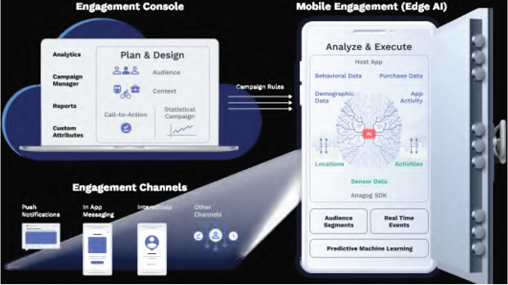
Figure 1. Introduction to the Customer Behavior Analysis Platform Structure of Anagog 6 Company
These modules and add-ons, consuming minimal energy, can access customer data and create highly accurate content for each customer. They target customers with precise content at specific times, analyzing customer behavior by collecting various inputs from the user’s phone, including purchase data, demographic data, behavioral data, data related to app usage, and available sensor data such as geographical location.
The Engagement Console allows creating fully personalized campaigns without the need for knowledge of the target audience’s identity or their momentary geographical location. The JeMA (JedAI Marketing Automation) process will invert the development and deployment process of campaigns, aligning them with users’ personal data. Fully personalized messages, specifically tailored to individual recipients, will be prepared and sent separately and uniquely to each user.
Anagog’s geographical fencing modules (JedAI Smart POI, JedAI POI Discovery, and JedAI Micro-Fencing) collaborate within the mobile interactive platform to create a sense of location-based data without compromising user privacy. While access to geographic coordinates of individuals can be useful, it’s valuable to produce data that aligns with a customer’s preferences and interests regarding a specific geographic point (POI). Understanding the importance of each geographical point concerning the individual’s interest can be beneficial for generating accurate content for interactive campaigns.
2. System Performance Scenario
The campaign, through continuous analysis and adaptability, is executed and analyzed on mobile phones. Customers who fall within the defined conditions of micro-segment 9 of this campaign, such as “users leaving home before 7 a.m. in the morning” or “users visiting a restaurant three times a week,” can be part of the campaign’s audience. To enhance targeting accuracy, more than one micro-segment can be combined to select the audience. For example, “users who spend 45 minutes driving daily with their workplace in the city center” are likely to spend considerable time in traffic and might be interested in good parking locations.
Once the specified criteria for each micro-segment match with one or several users, to send a message to the user, the campaign’s conditions need to align with various micro-segments. For instance, when an event occurs, such as “when a user arrives home” or “when a user enters a parking lot,” the campaign is locally informed and executed.
The sent campaign message can vary, tailored uniquely for each user. A brief message could be sent to a user with limited time to decide and respond, while a longer message might be suitable for a user with more time, like someone starting a train journey. Or for an engaged user, a real-time discount coupon can be sent (similar to Figure 2). The platform ensures that suitable users engage at the right time and place.
Furthermore, the console enables the definition and loading of individual personal attributes for each user separately into the system for better differentiation. To achieve this, user profiles, past purchasing behavior, loyalty program information, or any existing customer-related information held by an organization can be utilized for further segmentation and personalization.
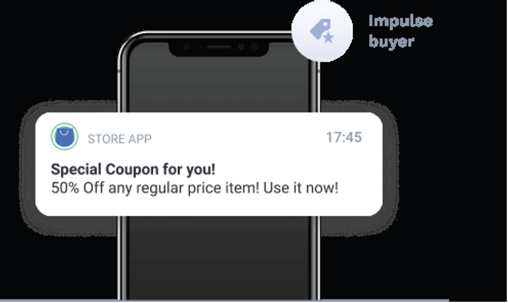
Figure 2. A real-time, location-based, and time-appropriate coupon for a customer.
3. Conclusion
Smart edge processing is one of the essentials of targeted marketing. Delivering precise business recommendations tailored to each user’s preferences requires access to the most private data of a user that must remain solely within the user’s mobile phone. Therefore, edge-AI-powered processing within a mobile user’s device meets the requirements for innovative targeted marketing and sales, achievable through the implementation and realization of Edge-AI in complementing the Mobile Edge Computing (MEC) concept. ANAGOG stands as a pioneer in this field globally, offering powerful products for this purpose. Its products, installed on the user’s mobile phone, will provide deep insights into the user without compromising the user’s private data for the seller of products and services.
References
- https://www.advian.fi/.
- K. B. ,. M. P. C. ,. D. P. M. Javier Mendez, “Edge Intelligence: Concepts, Architectures, Applications, and Future Directions,” ACM Trans, actions on Embedded Computing Systems ed. 5, pp. No 48 PP 1-41, Sept. 2022.
- M. S. K. F. A. M. I. A. M. S. MOHAMMAD BABAR, “Cloudlet Computing: Recent advances, Taxonomy, and Challenges,” IEEE Access, 9, pp. 29609 – 29622, 2021.
- C. F. T. N. F. J. A. N. a. e. Ashkan Yousefpour, “All one needs to know about fog computing and related edge computing paradigms: A complete survey,” Journal of Systems Architecture ed. 98, pp. 289-330, 2019.
- Mobile Customer Engagement Platform | Anagog
- Anagog Corp. , “Mobile Engagement Platform,” 2023. Available: https://www.anagog.com › mobile-engagement-platform.