
Abstract: Recent advancements in Satellite Communications (Satcom) have emerged as a new focus area in advanced technology research. Satcom has found various applications since its inception, including media broadcasting and internet services. Today, with the evolution of infrastructure for internet provision, Satcom is undergoing a transformation phase, including the design of data-centric systems. The need to expand telecommunications coverage in underserved areas, such as developing countries and aerial, maritime, and rural regions, is a driving force behind advancements in Satcom. Moreover, the pivotal point of convergence for 5th generation communication networks (5G) integrates and harmonizes diverse wired and wireless technologies. In this context, Satcom aims to streamline the integration of these unique applications and enable the cohesive integration of technologies. This article explores the achievements of satellite communications in the development of the Internet of Things (IoT) and the provisioning of 5G connectivity for IoT devices.
Index Terms: Satcom communications, 5G networks, Satellite IoT, mobile operators, and non-terrestrial networks.
- Introduction
So far, with the launch of the fifth-generation wireless communication network (5G) in many countries, people’s lives have significantly transformed. The satellite communications industry during the COVID-19 pandemic, which brought a wave of shocks across all industries worldwide, has highlighted the essential role of Information and Communication Technology (ICT) in preserving and providing telecommunications services to the general public.
The rapid growth of Internet of Things (IoT) applications has notably propelled the development of the terrestrial 5G communication network to meet critical requirements for enhancing user experience, such as boosting mobile broadband (eMBB), reducing latency (URLLC), and increasing capacity for connecting users within a geographical area (mMTC). In comparison to terrestrial communications, satellite communications offer broader coverage at lower costs and higher adaptability.

It is anticipated that the sixth-generation wireless network (6G) will create a fully connected world by integrating both terrestrial and satellite communications to leverage the advantages of both technologies. The establishment of terrestrial and satellite communication network infrastructures has facilitated the development of ubiquitous access to the Internet of Things and 5G technology, thus integrating satellite communications into the telecommunications industry.
The market outlook of satellite communications for 5G is categorized based on solution types (Backhaul and tower feed, Trunking and head-End Feed, Communication on the Move, Hybrid Multiplay), orbits (GEO, MEO, LEO), spectrum bands (L and S bands, C and X bands, Ku and Ka bands), services (mobile broadband, critical government and defense communications, satellite IoT), and end-users (defense, government, commercial, consumers). The satellite IoT service in the 5G satellite communications market is a subject that we will explore further.
2. Ground communication networks and satellites
The continuous evolution of our social, political, and work life has been closely associated with global changes. The importance of mobile communications is evident. With emerging technologies like 5G and IoT, we are witnessing drastic changes in the future landscape. Modern societies are living in highly intelligent cities. Preserving aspects of life through wearable technologies, a trend towards working in automated transportation systems and aviation, a shift towards smart agriculture and fishing, all indicate a quest for an environment-friendly life. Pursuing the development of these technologies and amidst a global competition for advancement and the best technology, the Federal Communications Commission (FCC) has made an agreement with SpaceX to establish a system consisting of 12,000 communication satellites in low Earth orbit, known as “Starlink,” utilizing phased-array antennas for low-latency, high-bandwidth uploads and downloads.
Ground communication networks primarily focus on users in urban areas and exhibit weak performance in covering regions with limited access such as remote areas, deserts, and oceans. Satellites can be employed to extend the coverage of 5G terrestrial networks. However, the limitations satellites face include considerable latency and relatively low data rates. Therefore, extensive research has been conducted on integrating terrestrial and satellite components to harness the benefits of both technologies and enable seamless broadband coverage. Given the substantial differences between satellite communications (SatComs) and terrestrial communications (TerComs) in phenomena like channel fading, transmission delay, mobility capabilities, and their coverage, establishing an efficient hybrid satellite-terrestrial network (HSTN) still poses considerable challenges. To shed more light on the matter, an HSTN is a combination of considered architectures aiming to amalgamate satellite-terrestrial communications’ unique features.
Figure 1. Satellite Communications and 5G Networks.
Low Earth Orbit (LEO) satellite communications, providing global coverage, play a significant role, especially in areas with accessibility challenges like open seas, deserts, and remote areas. The global market for satellite IoT communications is directed by the expansion and growth of wireless 5G connectivity. Substantial investments in LEO satellite systems are essential for the growth of the satellite communications market for IoT. These investments, benefiting from low costs, advanced mechanics, compatibility, assembly simplicity, mass production, and short life cycles, are projected to drive market growth in the coming years.
Satellite IoT services refer to using satellite networks and services for connecting IoT ground sensors and endpoints to a server (e.g., in a public or private cloud) as an alternative to ground communication networks. The market for satellite IoT communications is classified based on the type of orbit (LEO, Medium Earth Orbit – MEO, and Geostationary Orbit – GEO). The LEO system potentially represents an appealing solution for extending 5G connectivity to remote and underserved areas where terrestrial coverage is absent. Only about 10% of the Earth’s surface has access to terrestrial connection services, presenting a vast opportunity for satellite IoT communications. LEO orbits are suitable for low-power communications and reduced signal propagation losses, making them ideal for interacting with low-power IoT devices. Nowadays, most LEO satellites are made for IoT via CubeSat technology, allowing startups to mass-produce parts and commercialize components, drastically reducing satellite design and development costs. Due to their compatibility, cost-effectiveness, advanced mechanics, ease of assembly, and launch, significant investment in LEO satellites attracts major players. These satellites have short life cycles and reach mass production, contributing to the increasing demand for low-cost, high-speed internet in government and commercial sectors such as retail, banking, and oil and gas. Furthermore, investment in LEO systems has been prompted by the need for internet access in rural areas among individual consumers in various countries. Additionally, the use of LEO satellites in space optical communications has expanded due to rapid advancements in laser beam technology.
3. Internet of Things and 5G Technology in Satellite Communications
The Internet of Things (IoT) began its simple remote monitoring of systems such as first-generation vending machines and smart refrigerators. Today, this technology is advancing towards fully connected cars, smart networks covering entire cities and countries, and remote healthcare and wellness for a new era. Predictions indicate the existence of 75 billion IoT-connected devices by 2025, nearly three times the number in 2019.
The world’s first 5G satellite, owned by Sateliot and launched by SpaceX, aims to provide coverage in areas with weak IoT internet coverage. Named “The ground break,” this Spanish satellite is the first standard 5G satellite orbiting the earth. Launched from Vandenberg Space Force Base, California, through a joint mission with the Spanish company Sateliot, it is the initial piece of a future constellation consisting of 250 nano-satellites. Its objective is to provide 5G connectivity from space to IoT devices while establishing global communication alongside terrestrial cellular borders. Sateliot, the satellite’s creator, will also serve as the celestial network operator, based in Barcelona, believing that launching such satellites will facilitate global IoT access.
The Internet of Things represents the connection between surrounding objects and equipment. These objects, when connected to the internet, will enable control via mobile phones or tablets. Sateliot believes that by establishing connections between objects, a coherent network will emerge, potentially enhancing the functionalities of these devices. Thus, users can transition status from terrestrial networks to non-terrestrial networks.
This satellite has an integrated module that provides direct connectivity to NB-IoT devices. Any IoT device supporting 5G with the updated NTN 17-Rel standard can connect to the 5G technology provided by the satellite.
The 5G network has paved new ways for the entry of IoT applications in many industries, offering innovative use cases. Low latency and the extensive coverage of 5G networks are expected to support ten times more devices per square kilometer compared to 4G. The 4th generation mobile network couldn’t meet the rapidly growing needs of networks, including new communication services like IoT. Therefore, the 5th generation of communication networks is anticipated to fill this gap. Multiple access technologies like NOMA and satellite communications are identified as key technologies for achieving 5G networks. Studies indicate significant interest in NOMA’s application in 5G satellite communications.
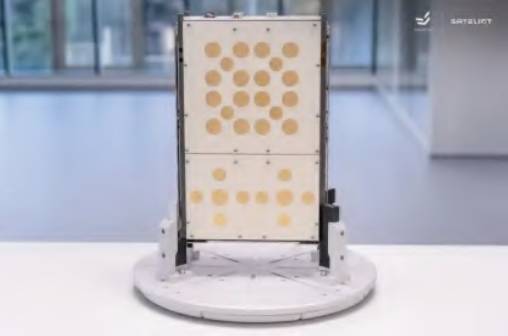
Figure 2. Sateliot Satellite [16].
4. The IoT Satellite Communications Market.of Things and 5G Technology in Satellite Communications
Mobile cellular coverage encompasses only a limited percentage of Earth’s surface. Hence, technology developers are compelled to find solutions to expand their access beyond terrestrial infrastructure limitations. This need led to an increased focus on satellite communications for broader coverage. Consequently, a new category of IoT, Satellite IoT, emerged.
The 5G ecosystem will play a crucial role in integrating satellite and terrestrial networks. Satellite communications complement cellular and non-cellular terrestrial networks in remote locations, serving prevalent industrial purposes. The global market for 5G satellite communications is projected to grow at an annual compounded rate (CAGR) of approximately 28.91% from 2023 to 2028. This market will predominantly involve the integration of advanced technologies such as IoT, AI, and independent technologies in 5G satellite communications across various sectors like defense, government, consumer goods, energy, water, and electricity to provide better connectivity in the current network infrastructure. Additionally, due to the need for a widespread, secure network for seamless operational execution, the demand for 5G satellite communications is significantly increasing. Similarly, the number of subscribers to satellite IoT connections surpassed 5 million this year, and it is projected to reach 21 million in the next five years.
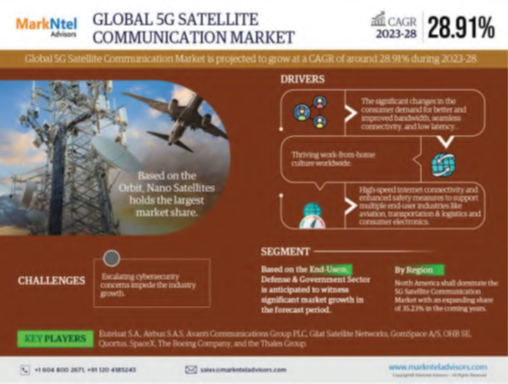
Figure 3. The 5G Satellite Communications Market[15].
The motivation behind satellite communications stems from the pressing need for global connectivity for IoT devices. Various businesses are investing in expanding satellite communication application programs. With technological advancements, it’s predicted that the global market for satellite IoT communications will rapidly develop, offering many services for monitoring and tracking equipment for intelligent data transfer.
5. Analysis of Competitors in the IoT Satellite Communications Market.
Over the past decade, we’ve witnessed a revolution in the space industry. Significant advancements in this technology, such as the rapid adoption of CubeSat technology, reusable rocket technology, and the swift evolution of processors, have reduced barriers to industry growth, enabling newer and smaller players to access the market. The IoT satellite communications market is highly competitive, comprising several key players such as Astrocast, Inmarsat Technologies, Kepler Communications, Ligado Networks, Galaxy Space, Geely, and many others. However, only a few major players currently dominate the market in terms of market share.
In the not-so-distant past, the satellite industry primarily focused on services like imagery services for surveillance, television broadcasting, or location-based services such as GPS. Until recently, satellites were not suitable for communication applications due to low data rates, high costs, and significant latency. As low latency and high reliability are necessary for using satellites in 5G networks, advancements in low Earth orbit (LEO) satellite industry facilitate this requirement. LEO satellites will play a crucial role in expanding cellular 5G networks to remote areas not covered by small cellular networks. For end-users, satellites enable the seamless extension of 5G services from cities to airplanes, cruise ships, and other remote vehicles and locations.
6. Conclusion
Technological advancements in information technology in recent decades have brought about significant transformations in the telecommunications and communication industry. With the global economy’s growth, telecommunication service providers encounter new challenges and opportunities in this competitive digital environment. Having a proper understanding of the players and elements in the satellite telecommunications industry will lead to long-term profitability while reducing investment risks. Satellite communications have become an integral part of telecommunication systems today. Satellite communications based on radio systems enable communication between two points on Earth through equipment orbiting the Earth. With the growth of the internet, a substantial volume of internet traffic is being transmitted via satellites, transforming internet service providers into one of the largest customers of satellite communications.
It’s a reality that there is no room for uncreative businesses in the coming years. Hence, the significance of IoT and 5G networks becomes evident. The emergence of the fifth generation of mobile networks in cellular communications, along with the development of the IoT industry, has captured the attention of mobile operators. The fact that telecommunication players are themselves the carriers of internet connectivity indicates that this industry will play a significant role in implementing and deploying IoT.
The potential of 5G networks can potentially provide global coverage, even in remote areas and oceans. The use of satellites, particularly satellite-based solutions enabling 5G in remote regions or areas currently underserved by mobile networks or experiencing poor service, has garnered significant attention.
References
- O. Kodheli et al., “Satellite Communications in the New Space Era: A Survey and Future Challenges,” in IEEE Communications Surveys & Tutorials, vol. 23, no. 1, pp. 70-109, Firstquarter 2021, doi: 10.1109/COMST.2020.3028247.
- B. Zheng, S. Lin and R. Zhang, “Intelligent Reflecting Surface-Aided LEO Satellite Communication: Cooperative Passive Beamforming and Distributed Channel Estimation,” in IEEE Journal on Selected Areas in Communications, vol. 40, no. 10, pp. 3057-3070, Oct. 2022.
- H. A. -D. F. Kokez, “On Terrestrial and Satellite communications for telecommunication future,” 2020 2nd Annual International Conference on Information and Sciences (AiCIS), Fallujah, Iraq, 2020, pp. 58-67.
- X. Fang, W. Feng, T. Wei, Y. Chen, N. Ge and C. -X. Wang, “5G Embraces Satellites for 6G Ubiquitous IoT: Basic Models for Integrated Satellite Terrestrial Networks,” in IEEE Internet of Things Journal, vol. 8, no. 18, pp. 14399-14417, 15 Sept.15, 2021.
- Biyoghe, J. S., & Balyan, V. (2021). NOMA Application to Satellite Communication Networks for 5G: A Comprehensive Survey of Existing Studies. J. Commun., 16(6), 217-227.
- https://www.mordorintelligence.com/industry-reports/satellite-iot-communication-market
- https://spacenews.com/op-ed-nb-5g-iot-is-thenext-big-thing-in-the space-industry/
- https://teletimesinternational.com/2022/rohde-schwarz-continues-virtual-satellite-industry-days-series-with-non-terrestrial-networks-and-satellite-5g-iot/
- https://www.linksystems-uk.com/satellite-internet-of-things-iot-for-5g-whats-the-story/
- https://www.5gamericas.org/non-terrestrialnetworks-could-be-the-next-frontier-for-5g/
- https://nasimtelecom.com/overview-new-generation-mobile-networks/
- https://www.satellitetoday.com/iiot/2020/08/19/mediatek-inmarsat-demonstrate-5g-satellite-iot-data-connection/
- https://www.accelercomm.com/news/satellites-role-in-the-future-of-5g
- https://www.psmarketresearch.com/market-analysis/5g-satellite communication-market
- https://www.marknteladvisors.com/infographics/
- global-5g-satellite-communication-market.html
- https://gizmodo.com/sateliot-first-5g-satellitequash-iot-dead-zones-1850350158