
Abstract ___ 5G will consist of a vast number of very small cells positioned close together. The concentration and proximity of these cells make the management of frequency spectrum challenging. However, technologies such as Multi-User-MIMO and higher operating frequencies will lead to denser frequency reuse and more precise focus on concurrently connected users, significantly reducing frequency interference. Yet, for a network aimed at servicing a million simultaneous users per square kilometer, simply focusing on antenna radiation patterns and statically allocating frequency bands won’t suffice to enhance customer experience. One proposed solution involves end-to-end control of network parameters and elements to identify potential issues throughout the service delivery chain and strive for their improvement, thereby enhancing service quality and customer experience. Considering the fluctuating user traffic in different cells at different time intervals, statically allocating frequencies to cells would result in suboptimal resource usage across different time slots. Therefore, dynamically allocating frequencies, considering the traffic, can be another solution to enhance the performance of cellular networks.
Index Terms: Artificial Intelligence, machine learning, dynamic allocation of frequency resources.
- Introduction
At the moment, with the optimal and dynamic allocation of frequency resources in each cluster, precise analysis of noise and input interference, identification of intrusive sources, and disruptors can improve the quality of services offered and the effectiveness of frequency allocation. In fact, optimal frequency allocation requires not only allocating a higher number of frequencies to cells with higher traffic but also selecting frequencies with minimal interference for assignment to different cells. First, we’ll delve into the discussion of dynamic frequency allocation and then introduce products by DeepSig that can potentially address obstacles to achieving service quality and customer experience end-to-end.
2. Dynamic allocation of frequency resources
In a simple structure of 5G with static allocation of frequency resources, these resources are assigned based on the maximum anticipated traffic during peak hours. Considering an equitable distribution of all available resources among different cells, the result tends to allocate more resources to some cells during asymmetric traffic distribution within the network, leading to frequency shortage in other cells. In a densely populated 5G network, such a model for resource allocation in the network would be unfair. Therefore, an access-aware spectrum allocation method, allocating the frequency spectrum at the BS end considering the incoming traffic at a specific access point, would be more acceptable, similar to the approach proposed in reference [3]. In [3], the authors compared their method with traditional resource allocation methods (static allocation without considering variable input demand) and demonstrated that the proposed method not only optimizes the frequency-aware allocation according to the proposed demand but also enhances network performance in terms of user throughput, fair spectrum allocation, and frequency resource efficiency.
However, the access-aware model presented in [3] is somewhat static, as the demand for network access in different access points might vary over different periods and hours. Therefore, in [1], a dynamic model of frequency resource allocation, considering access demand variations over time, is suggested. The proposed approach in [1], based on realistic network simulation, positions the MBs as the primary network elements, and mobile equipment connects to these MBs. In this model, the MBs can consist of one or several sub-cells. Initially, all cells undergo an incremental handover, where cells with higher traffic have a better chance of being allocated available frequency resources. Then, to allocate frequencies to each antenna, two conditions are checked: first, if the accessible capacity Cij is less than the requested capacity rij, and second, if another frequency is available in that cluster for allocation to the remaining cells, while avoiding reusing a frequency in adjacent cells to prevent interference. This process repeats until the allocated frequency count equals the total available frequencies for an MB and the expected capacity is achieved; otherwise, the frequency allocation process is redesigned in the next iteration. The estimation of the expected traffic continuously occurs over a long time interval, utilizing updated input data regularly.
3. DeepSig Company
The DeepSig is a product-centric and technology-driven company that develops and delivers AI-driven wireless software solutions. The company endeavors to advance wireless signal processing and upgrade various wireless components, including baseband processing, wireless sensors, and other wireless user devices, using advanced AI technologies and signal processing experiences. DeepSig’s machine learning solutions notably enhance the performance, capacity, operational efficiency, and customer experience of fifth-generation (5G) networks. Its produced products in this domain include OmniPHY 5G™ and OmniSIG™. The company’s approach emphasizes using machine learning for optimal learning models from input events instead of designing proprietary algorithms under simplified models.
As defined in the context of 5G, one of the most important users of 5G is precise communication with industrial equipment and sensors/actuators in various applications like medicine, industry, transportation, and more. The proper functioning of these elements necessitates stable and interference-free network communication. Beyond unintended interference sources, intentional interference can occasionally occur, aimed at disruption or damage to infrastructures. Historically, interference management often happened reactively, either post-receiving interference reports from residents or after changes in key network performance indicators (KPIs), with physical monitoring team presence and spectrum monitoring tools. However, these actions frequently took place long after the occurrence of the incident and a decrease in received service quality in the receiver. Consequently, the old-fashioned frequency interference identification and response models were inactive, expensive, and prone to errors.
DeepSig’s new-generation solutions like OmniSig utilize machine learning to automatically monitor spectrum frequency and identify unauthorized interference sources with significantly greater precision, speed, lower costs, and without the need for engineering teams.
4. OmniSIG™ Sensor
OmniSIG introduces a new class of RF sensing and awareness in radio systems by leveraging advanced AI (Artificial Intelligence) technology from DeepSig. This tool marks the world’s first AI-based RF (Radio Frequency) front-end software that utilizes highly precise deep learning models for wireless signal characteristics. Capable of processing vast amounts of raw RF data using trained neural networks, it analyzes various RF signals and generates desired outputs in a fraction of a second. OmniSig is an incredibly agile software capable of collaborating with a wide spectrum of radio receiver equipment. This software can be deployed on a cloud platform or separately for installation and usage.
OmniSig has the ability to swiftly identify different known and unknown wireless signals and promptly report potential malicious activities. Moreover, it automatically analyzes structured data, enabling insights and extraction of patterns, thus providing a higher level of situational awareness and the capability to recognize unusual changes or behaviors in radio movements.
5. OmniSIG™ SDK
OmniSIG™ SDK is a complementary tool that, when added to the OmniSig sensor, enables a new class of AI-driven RF sensors in OmniSig radio systems. This SDK empowers OmniSig users to access a deeper understanding of known and unknown wireless signals without requiring an AI expert to operate the system. It allows end-users to create a customized, specialized AI-based RF sensing and identification system tailored to their specific applications. By combining the latest web technologies and advanced server-side tools, users can upload their desired signal snippets, label them using a Drag/Drop feature, and then use this training data to update the existing neural network without needing to write even a single line of DSP code or manually input thousands of signal snapshots.
With the OmniSIG™ SDK toolkit, customers can configure sets of RF data, train advanced deep learning inference models for custom wireless sensing applications, and deploy them on edge sensing devices. The OmniSIG SDK includes a foundational set of RF data for machine learning purposes, comprising numerous wireless signal modulations. Additionally, customers can blend their own datasets, signals, and custom signatures to train their AI-powered sensor.
OmniSIG SDK contains tools for the following purposes:
– Preprocessing, labeling, and configuring RF data.
– Training the OmniSIG sensor model with labeled data.
– Evaluating the performance of the designed system.
– Deploying the trained deep learning model in real-time within OmniSIG.
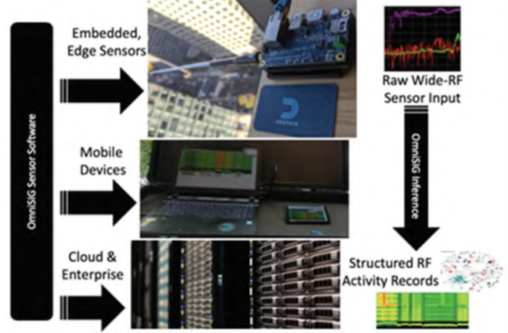
Figure 1. mniSig architecture [4].
Adapting to varying traffic intensities during different times of the day and days of the week/month is somewhat considered static. Allocating resources aware of traffic based on machine learning is a solution addressed in the reviewed article. Continuously monitoring the frequency spectrum and identifying/removing deliberate/unintentional interference sources are crucial for ensuring service quality. Previously, interference sources were identified based on changes in input KPIs or customer complaints, but with the advanced monitoring tools developed by DeepSig, this process will be conducted by thorough analysis of received signal data from the radio receiver using AI. This significantly reduces the response time to network disruptions from weeks to minutes.
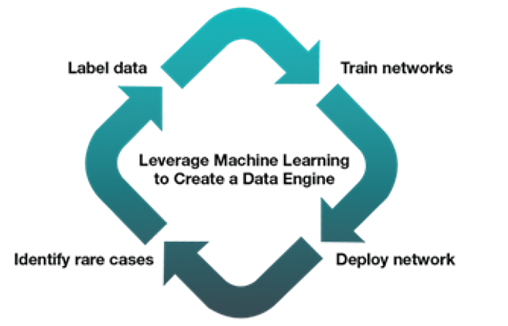
Figure 2. OmniSig SDK architecture [5].
6. Conclusion
5G networks are tailored for a large number of users and specific needs, with some of these requirements being crucial and reliant on guaranteed quality service. Ensuring service quality in 5G demands security assurance, access to necessary resources, and ensuring all parameters affecting service quality are maintained. In traditional networks, frequency resource allocation was done statically, ensuring service quality during peak hours while fairly distributing resources. Advancements in networks have led to resource allocation based on estimated needs during different hours. However, this allocation remains somewhat static due to the lack of updates with varying traffic intensities throughout different times of the day, week, or month.
Allocating resources based on traffic-aware machine learning is a solution that was explored in the reviewed article to address this issue. Furthermore, ensuring service quality requires continuous monitoring of the frequency spectrum and identifying and removing intentional or unintentional sources of interference. In the past, identification of interference sources was based on examining changes in input Key Performance Indicators (KPIs) or customer complaints. With the advanced monitoring tools produced by DeepSig, this process can be carried out by meticulously analyzing received signal data using AI training, significantly reducing the response time to disruptive network changes from weeks to less than minutes.
References
- E. L. A. E. G. V. RAKIBUL ISLAM RONY, “Dynamic Spectrum Allocation Following Machine Learning- Based Traffic Predictions in 5G,” IEEE Access , Issue 9, pp. 143458 143473, October 2021.
- S. Gopi, S. Kalyani L. H. a. et., “Co-operative 3D Beamforming for Small Cell and Cell Free 6G Systems,” IEEE Transactions on Vehicular Technology, Issue 71, No 5, pp. 5023-5036, 2022.
- E. L. A. a. E. G. V. R. I. Rony, “Cooperative spectrum sharing in 5G access and 14th Int. Conf. Wireless ”, backhaul networks
- Mobile Comput., Netw. Commun. (WiMob), pp. 239 246, Oct. 2018.
- iGR, “AI based RF Awareness for Private Wireless Networks A White Paper,” iGillott Research Inc, Austin, 2022.
- HP/DeepSig, “WIRELESS SIGNAL IDENTIFICATION AND ANALYSIS Enabling AI and Analytics at the Edge,” Hewlett Packard
- Enterprise Development LP, a00107131enw, Oct. 2020.